DGX Spark: Personal Research Lab
128GB VRAM enabling experiments that rival funded research teams
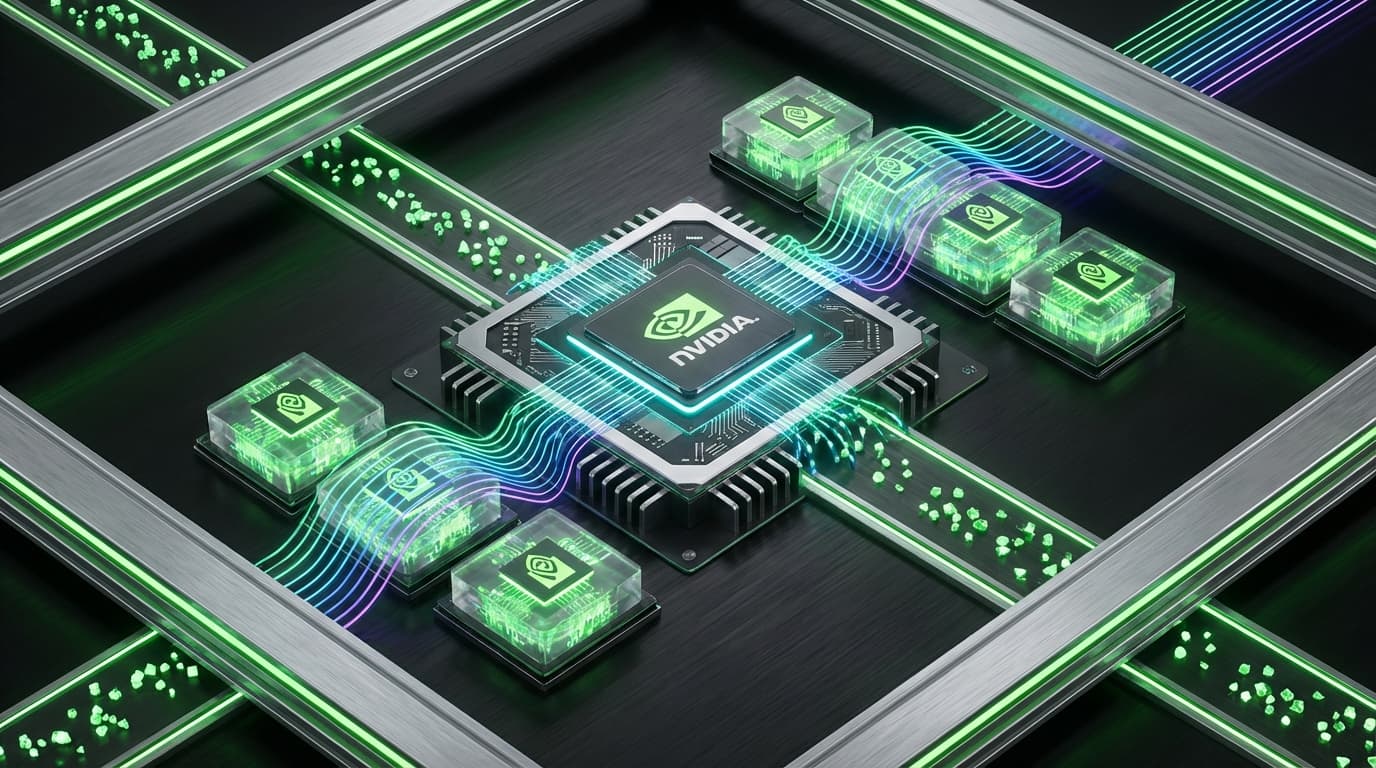
Building a personal ML research infrastructure on NVIDIA DGX Spark. The GB10 Blackwell GPU with 128GB unified memory enables training and experiments that would otherwise require expensive cloud compute or institutional resources.
The problem
The Resource Gap
Serious ML research requires serious compute. Training foundation models, running multi-agent experiments, and building vector indexes all demand GPU memory most personal hardware cannot provide. Cloud costs add up quickly.
- Consumer GPUs max out at 24GB VRAM
- Cloud compute costs $50K+/year for heavy research
- Data privacy concerns with cloud training
- Latency and availability issues with remote compute
What I built
Personal Petascale
The DGX Spark brings datacenter-class compute to a personal lab. 128GB unified VRAM runs models that do not fit in consumer memory. NGC containers provide 3.4x speedup. Local execution means zero cloud costs and full data control.
- GB10 Blackwell with 128GB unified memory
- NGC 25.09 containers with 3.4x speedup
- Continuous operation for autonomous research agents
- Integration with MacBook Pro and Raspberry Pi cluster
How it fits together
Architecture
The DGX Spark forms the compute backbone of a distributed personal cluster, with MacBook Pro for development and Raspberry Pi for production workloads.
Timeline
How it went
- Sep 2024DGX Spark acquisition and setup
- Oct 2024NGC container optimization
- Nov 2024OncoVLM training begins
- Dec 2024ARIA autonomous researcher deployed
- Jan 202532K+ vector index built
What it taught me
Lessons
- Personal infrastructure enables research without institutional constraints
- NGC containers provide massive performance gains over vanilla setups
- Unified memory eliminates the complexity of CPU-GPU data movement
- Local compute enables experiments cloud economics would prohibit
Stack
Connected work